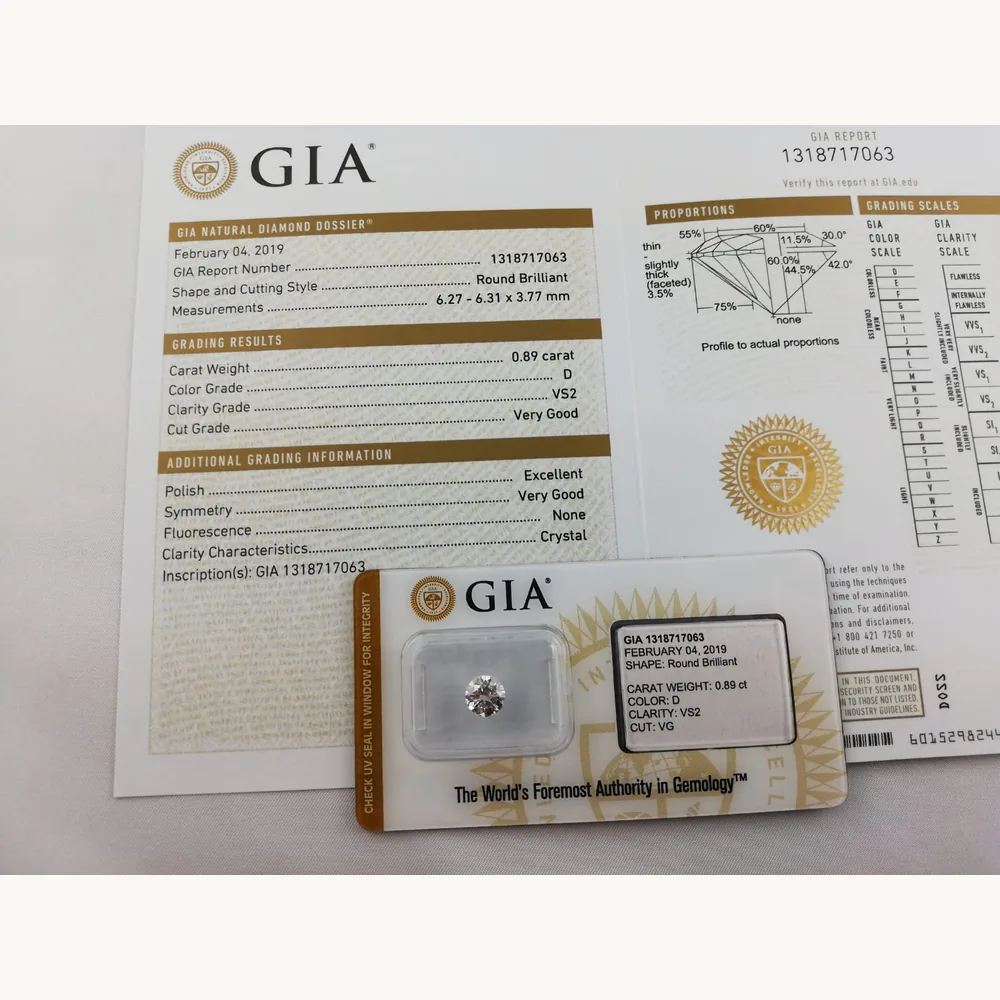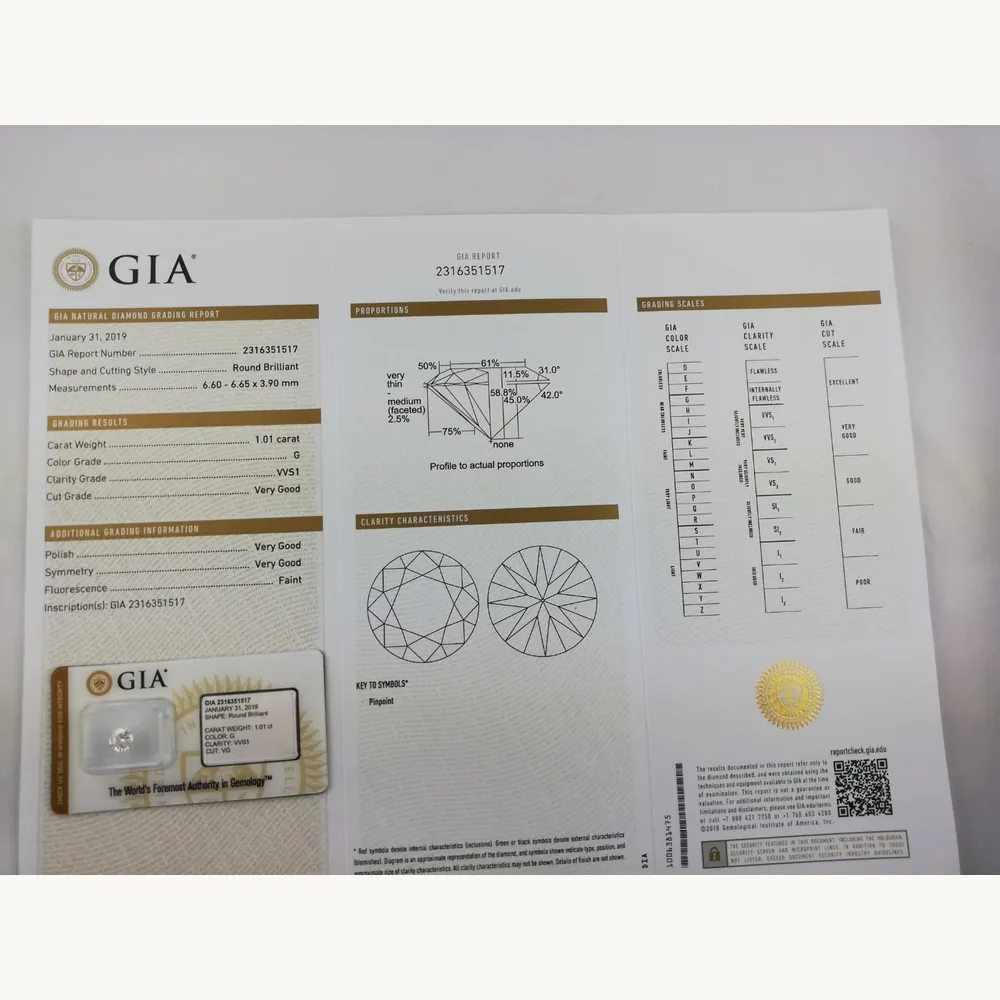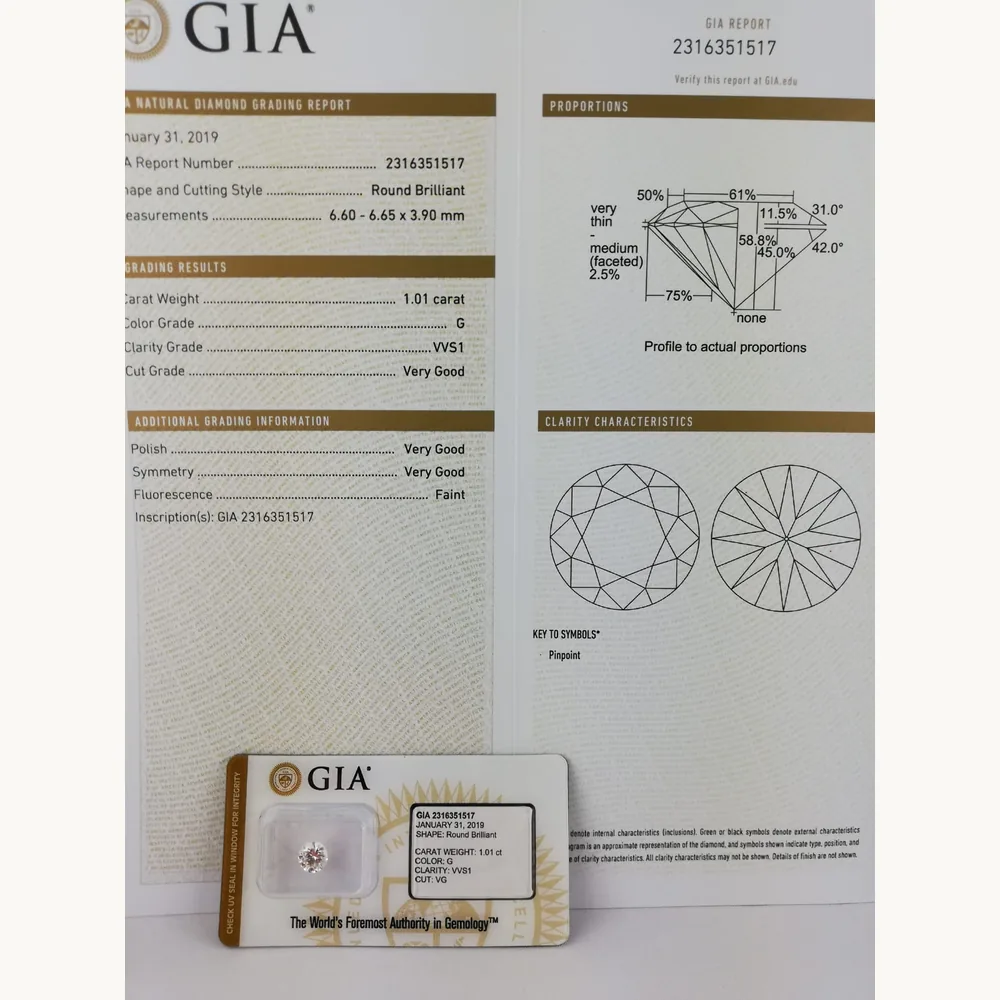
Certified loose stones, sealed packaging, transport and insurance.
How the Budapest exchange file is read
A loose diamond behaves on the market quite differently from the same stone set in a ring. There is no metal to value, no workmanship to interpret and no brand to authenticate. What remains is the stone, its laboratory report, and the demand for that exact combination of weight, colour, clarity and cut.
That simplicity works in the seller's favour. It makes competing offers genuinely comparable, it keeps any disagreement factual rather than aesthetic, and it allows a meaningful first answer to be given at a distance, before the stone is moved anywhere.
Why an unmounted stone is easier to assess
A set diamond can only be measured indirectly. Its weight is estimated from the diameter and depth visible through the setting, its apparent colour is influenced by the metal around it, and inclusions near the girdle may be hidden by claws. Each uncertainty widens the range in an offer.
Out of its mount the stone can be weighed to the hundredth of a carat, graded against master stones, and matched to its report through the laser inscription on the girdle. Precision narrows the range, and a narrower range usually works in the seller's favour.
The report is not optional in practice
In theory an uncertified stone can be sold. In practice it is bought at a discount that reflects the buyer's uncertainty. A GIA, HRD or IGI report removes much of that discount by making the grading verifiable rather than a matter of opinion between two parties with opposing interests.
If your stone has never been certified, that is worth discussing before anything else. Depending on weight and apparent quality, submitting it to a laboratory may cost less than the discount it would otherwise attract. For a small stone it may not, and the arithmetic is explained either way.
Details that move the price beyond the four Cs
Two stones with identical grades on a report's first page can trade at different levels. Table and depth percentages, crown angle, girdle thickness, polish and symmetry all shape how a stone returns light, and cutting that favours weight over proportion leaves a mark the trade recognises.
Fluorescence is the classic example. Faint blue fluorescence is generally treated as neutral, while strong fluorescence in a high colour grade can narrow the pool of buyers and in a lower grade may pass unremarked. None of this shows in a photograph, which is why the full report matters.
Moving and insuring the stone safely
A loose diamond weighs almost nothing and is very easy to lose. Keep it in its sealed laboratory packaging while the seal is intact. Breaking the seal removes a layer of verification, after which the stone has to be re-identified through its inscription and measurements.
For the journey to an appointment, a rigid stone paper or a small gem box inside a closed container is safer than a soft pouch. Household cover for valuables away from home is often capped, so the limit is worth checking before travelling.
From the first message to a confirmed figure
Send the report number or a scan of the certificate, a photograph of the stone against a plain white background, and a note of when you would like the matter settled. That is enough for a written reply setting out how the stone reads and what range is realistic.
The figure is confirmed once the stone has been weighed and examined in person and the inscription checked against the report. Where stone and paperwork agree, the confirmed figure normally sits inside the range you were given. Where they do not, the discrepancy is shown to you.