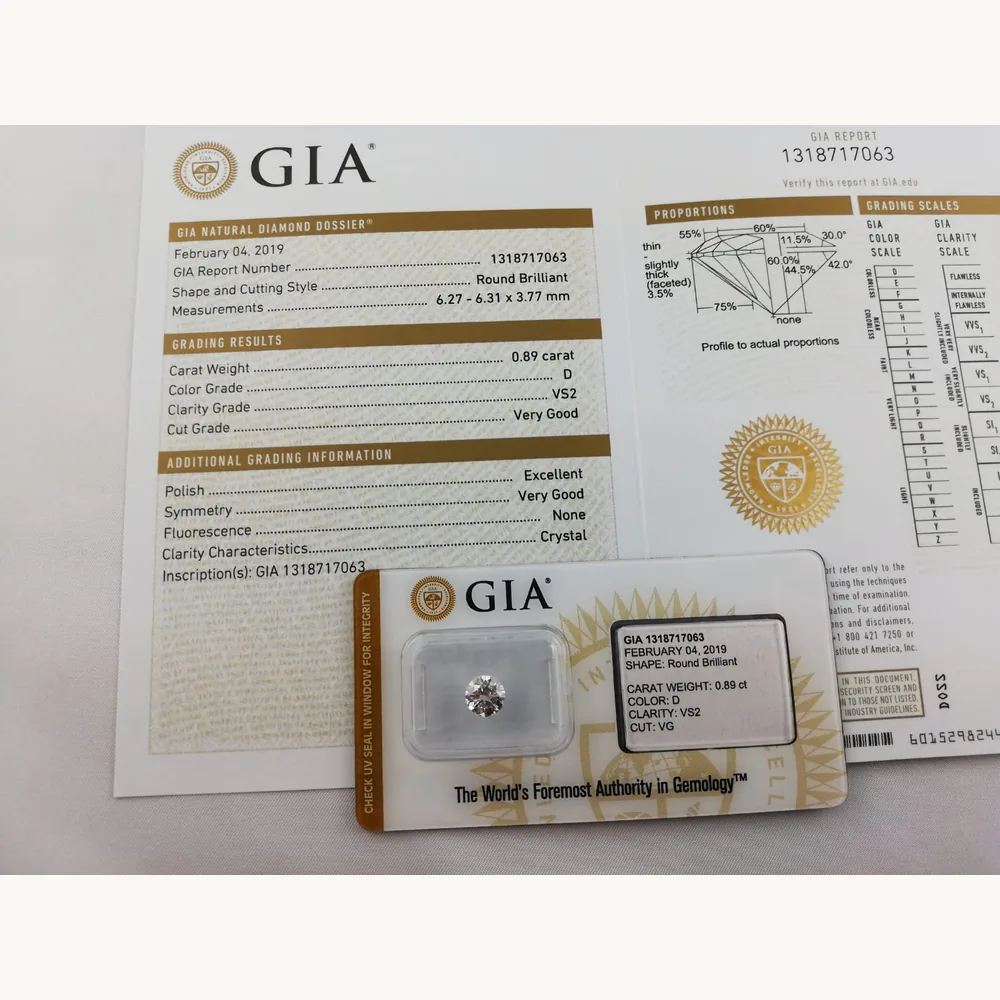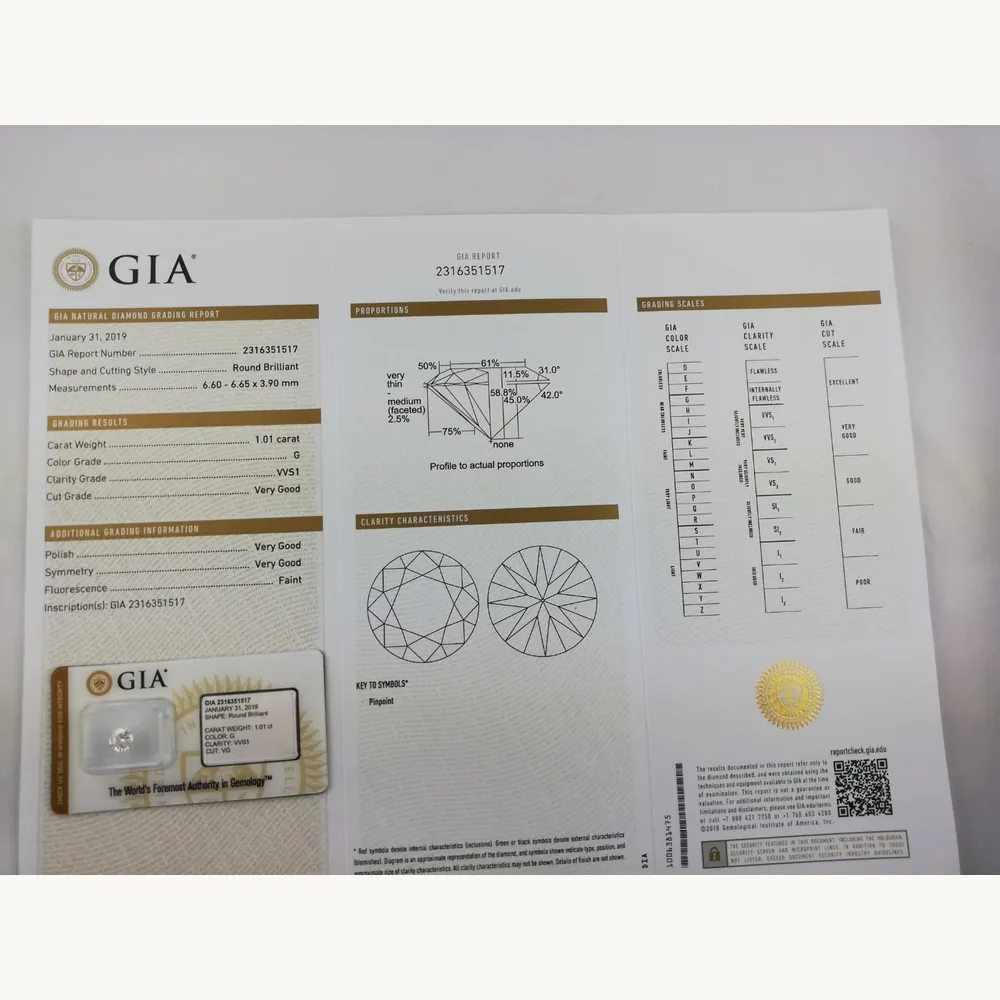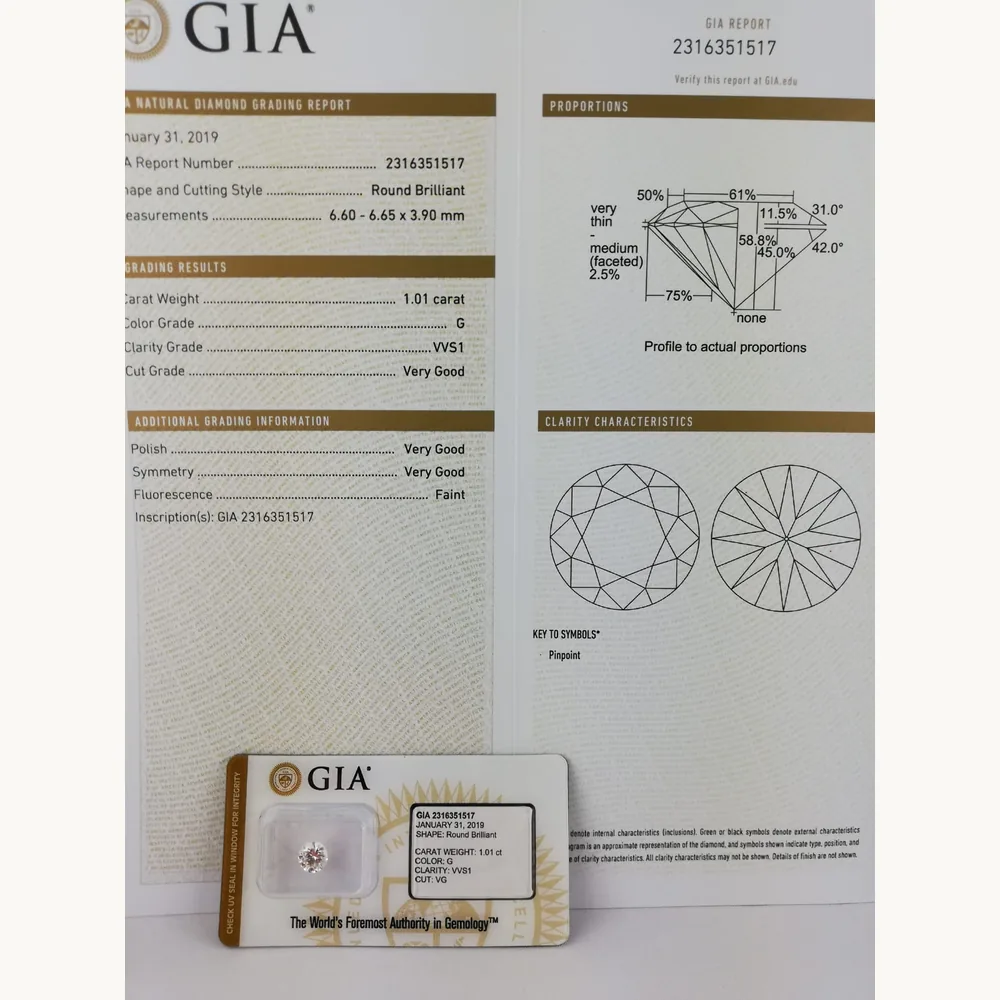
Report number, online verification, grades, and what grading cannot tell you.
How the Budapest exchange file is read
Reports from the Gemological Institute of America are read the same way by dealers who will never meet, and that is precisely their use: they give an owner in Budapest and a buyer in Antwerp a shared vocabulary. Difficulty starts only when the document is asked to do more than it was built for.
A report describes a stone. It does not price it, does not authenticate the ring around it, and does not follow it into resale. Holding that line is the difference between negotiating from knowledge and feeling ambushed by an offer.
Verify the report before anything else
Each report carries a number, and anyone can check it free of charge through the Report Check service on the laboratory's own site. The record shown online should match the paper in your hand line by line: weight, colour, clarity, cut grade, measurements, and the laser inscription where there is one.
Do this yourself before approaching any buyer. Mismatches are usually harmless, a superseded copy or a stone recut since grading, but not always. A discrepancy found by the owner leads to a calm conversation; the same discrepancy found by the buyer leads to a very different one.
What the laboratory actually states
GIA states that on the day of examination one particular stone showed the characteristics listed. Colour and clarity are judged against physical master stones under controlled lighting, and the cut grade for round brilliants gathers proportions, polish and symmetry into one verdict on how the stone handles light.
The plotted clarity diagram deserves more attention than it usually gets. Two stones graded SI1 can look quite different in daylight depending on whether the inclusion sits under the table or out near the girdle, and the trade prices that difference even though the letter is the same.
What the report leaves out
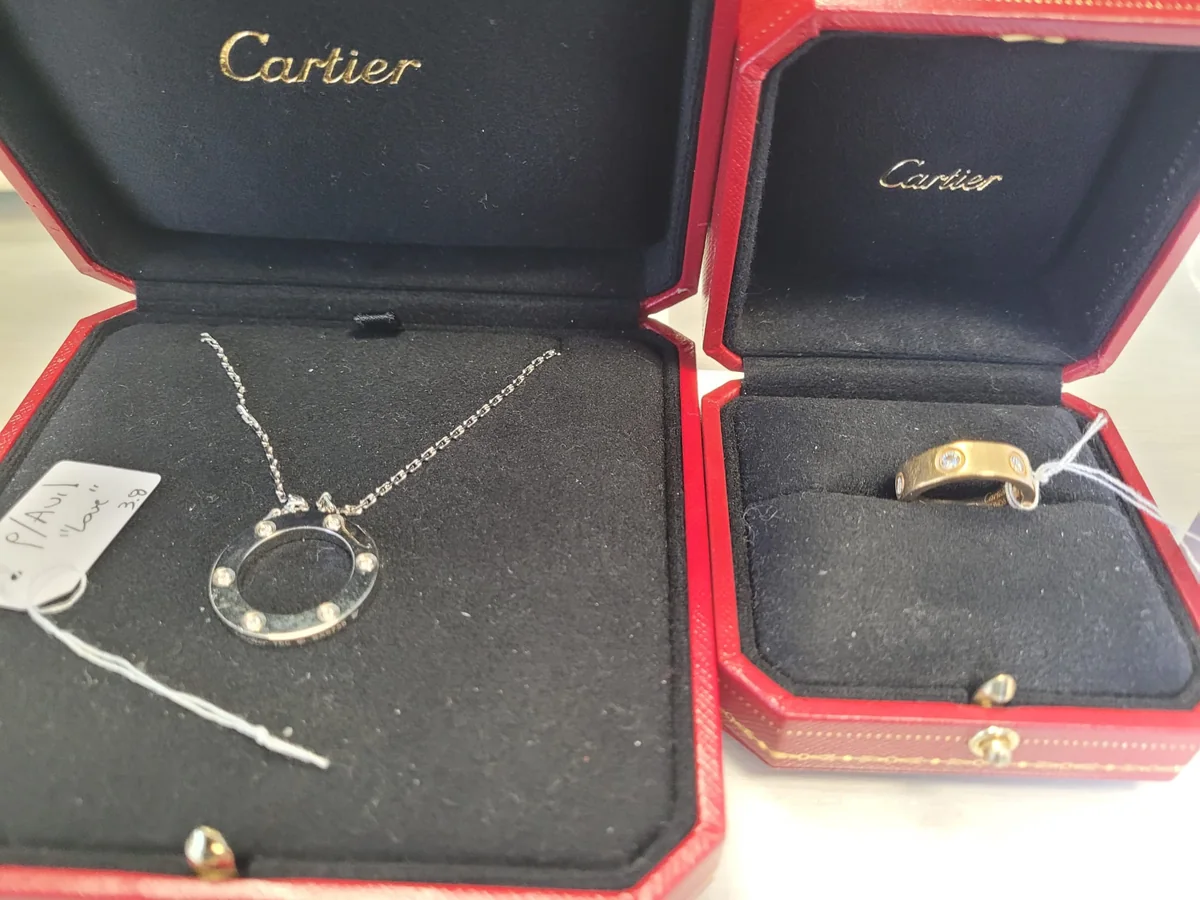
It is silent on the mounting. A report issued for a loose stone later set into a ring covers the stone alone: not the metal, not the workmanship, not the maison signature, and not the question of whether the diamond now in that setting is the one described. Hence the examination.
It is equally silent on the market. Grading holds still; demand does not. Fluorescence is weighed differently from one category to the next, and certain size and colour combinations change hands far more easily than their neighbours on the scale. A report is a fixed portrait of a stone in a moving trade.
GIA, HRD and IGI are not read alike
Laboratories are not granted equal confidence. GIA and HRD are generally treated in the trade as consistent references. IGI is used very widely, particularly for laboratory-grown stones and for jewellery sold at retail, and some older IGI reports are read with more caution on colour and clarity.
None of that makes a stone unsellable. It means the reading carries a wider margin, or that sending the stone for grading before sale may repay its cost and its delay. That advice is given as it stands, including on the many occasions when it points away from selling.
From report to offer
The most efficient file is a plain one: the report number, a photograph of the report itself, images of the stone or the jewel, and the purchase invoice if it was kept. That is enough for a remote reading to place the value and to name what the examination must settle.
At the appointment the stone is measured and weighed against the document, the inscription is looked for under magnification, and the grades are checked independently. Watching each step is encouraged. A report that survives that check makes everything simple; one that does not is better found in a private room than after money has changed hands.