Retail, insurance, trade and offer: four numbers, one stone.
How the Budapest exchange file is read
Almost every hard conversation about diamond prices starts with two numbers that were never meant to be set side by side. An owner holds a valuation drawn up for insurance, hears an offer well beneath it, and concludes that someone is being dishonest. Usually no one is.
What follows explains what each number is for, and then what genuinely lifts or lowers an offer. No amounts are printed here: a figure invented for a website is worth less than nothing to an owner holding one particular stone.
Four numbers, four jobs
A retail price carries the boutique with it: premises, staff, financed stock, advertising and margin. An insurance valuation is set at replacement cost, frequently above retail, because its job is to let an insurer buy you an equivalent piece quickly. It never claimed to say what yours would fetch.
A trade price is what one professional pays another for goods destined for resale. An offer to a private owner sits near trade, adjusted for the work involved: verification, the capital tied up while the piece waits for its buyer, and the risk that it waits longer than planned. That gap is structural, not hostile.
Weight does not climb in a straight line
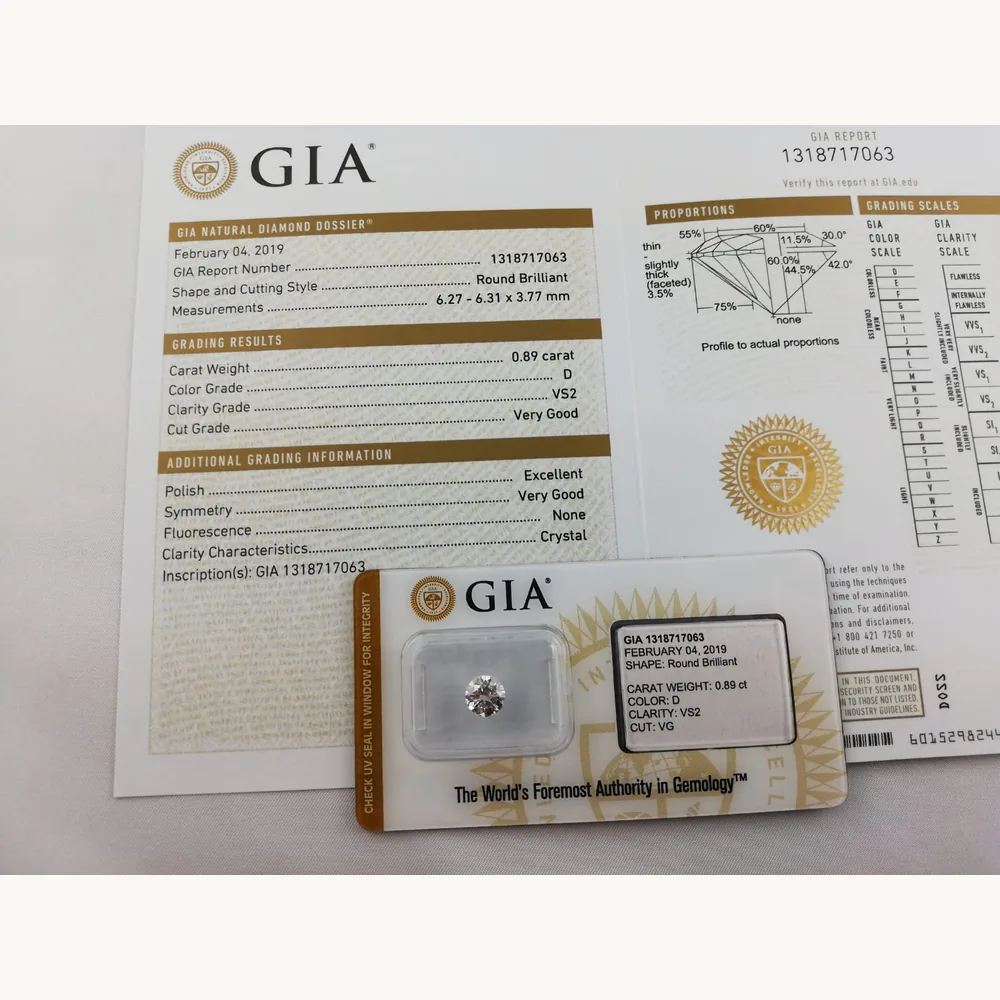
Price per carat rises in steps rather than smoothly, and the steps gather at commercially meaningful weights. A stone sitting just below a round figure can be worth noticeably less per carat than one just above, which is why a hundredth of a carat sometimes counts for more than a clarity grade.
The same logic explains a common surprise. Several small stones adding up to the weight of one large stone are worth considerably less than the large one, because rarity concentrates in size. Two half-carat diamonds are common goods; a single two-carat diamond is not.
The grades that actually move money
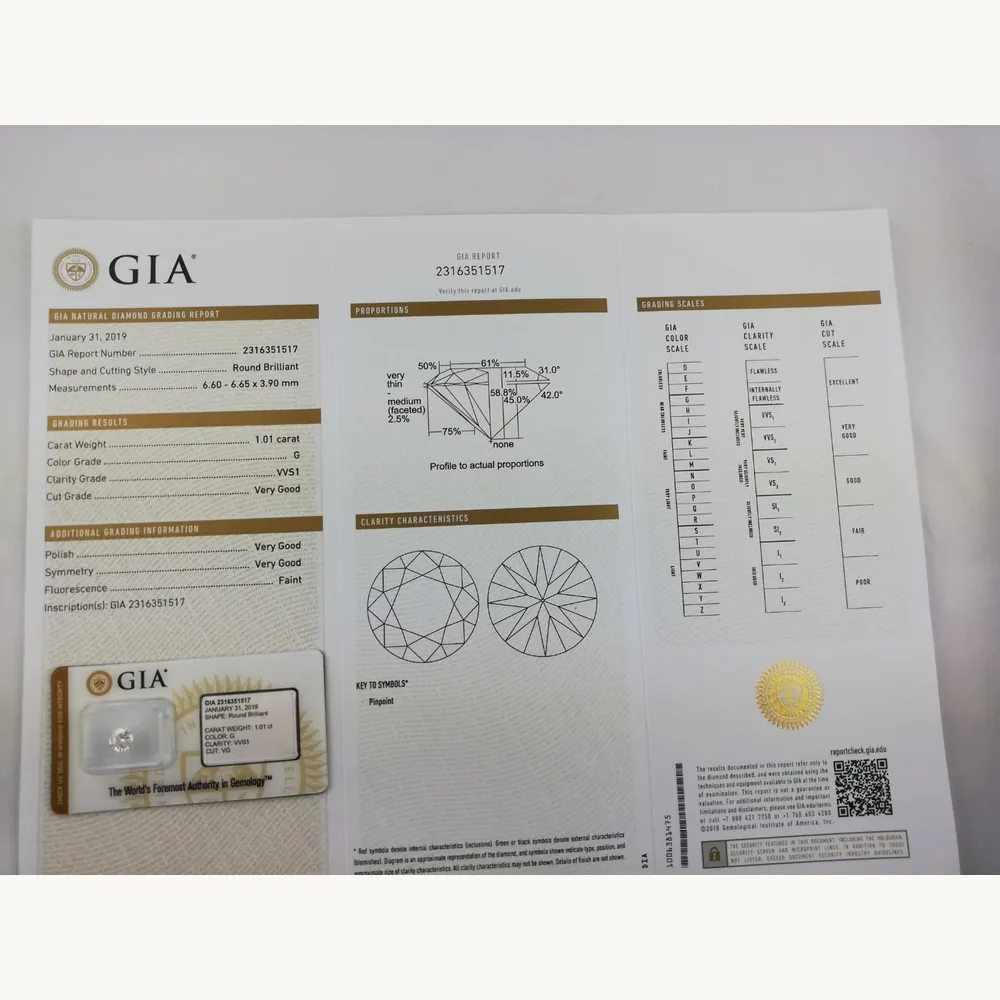
Colour runs on a scale where the visible step between neighbouring letters is slight and the commercial step is not. Clarity behaves similarly, moving most sharply around the threshold at which an inclusion becomes visible to the naked eye. Past that point, improvement is largely a matter of paperwork rather than appearance.
Cut is where value is most often lost without the owner noticing. A stone cut to hold weight rather than to perform optically looks duller, is harder to place with a buyer, and is priced accordingly whatever its colour and clarity promise. Fluorescence adds another layer, immaterial in some stones and a real deduction in others.
Mounting, signature and paperwork
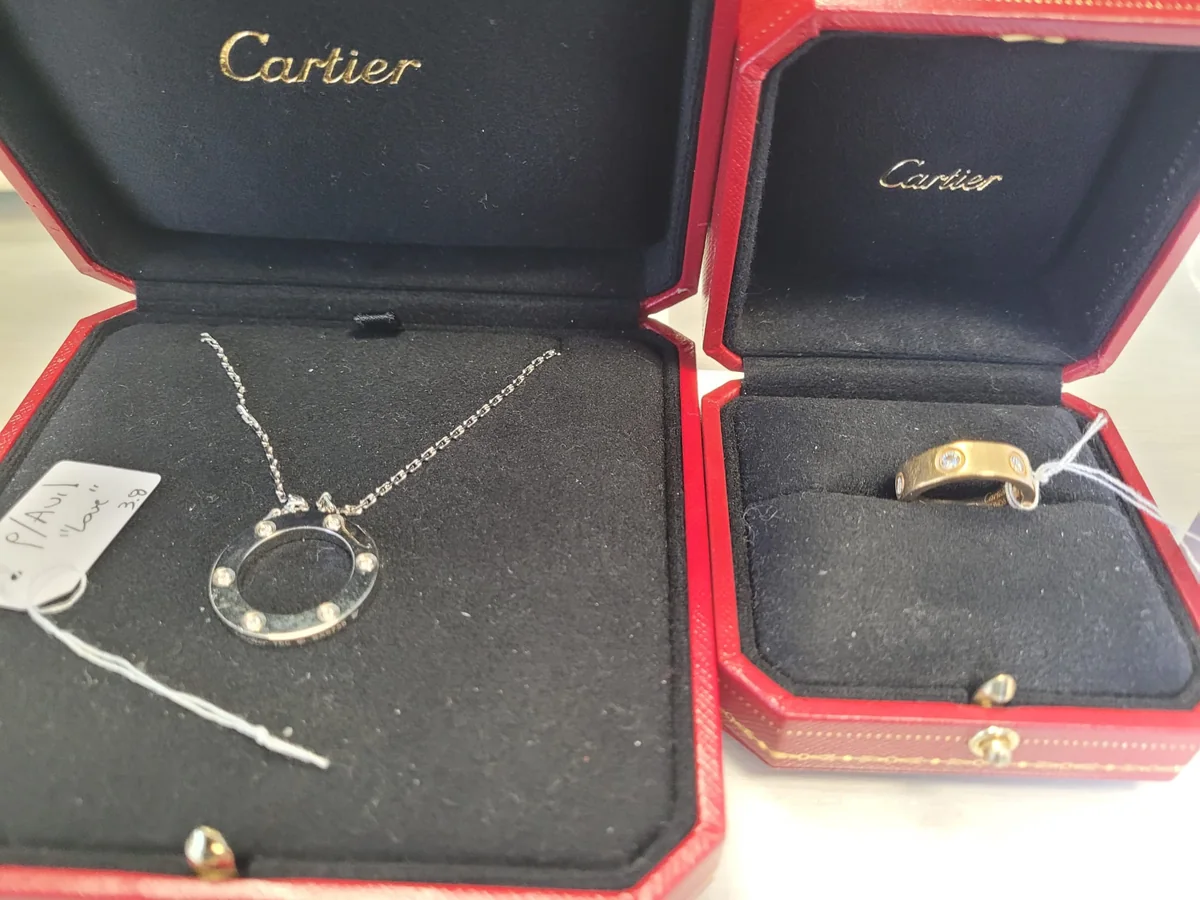
Once a stone is set, two markets apply at the same time. An unremarkable mounting is worth its metal and little else, and may cost something to remove. A signed piece from an established maison can be worth more intact than broken up, but only where signature, reference and condition agree and the model is currently wanted.
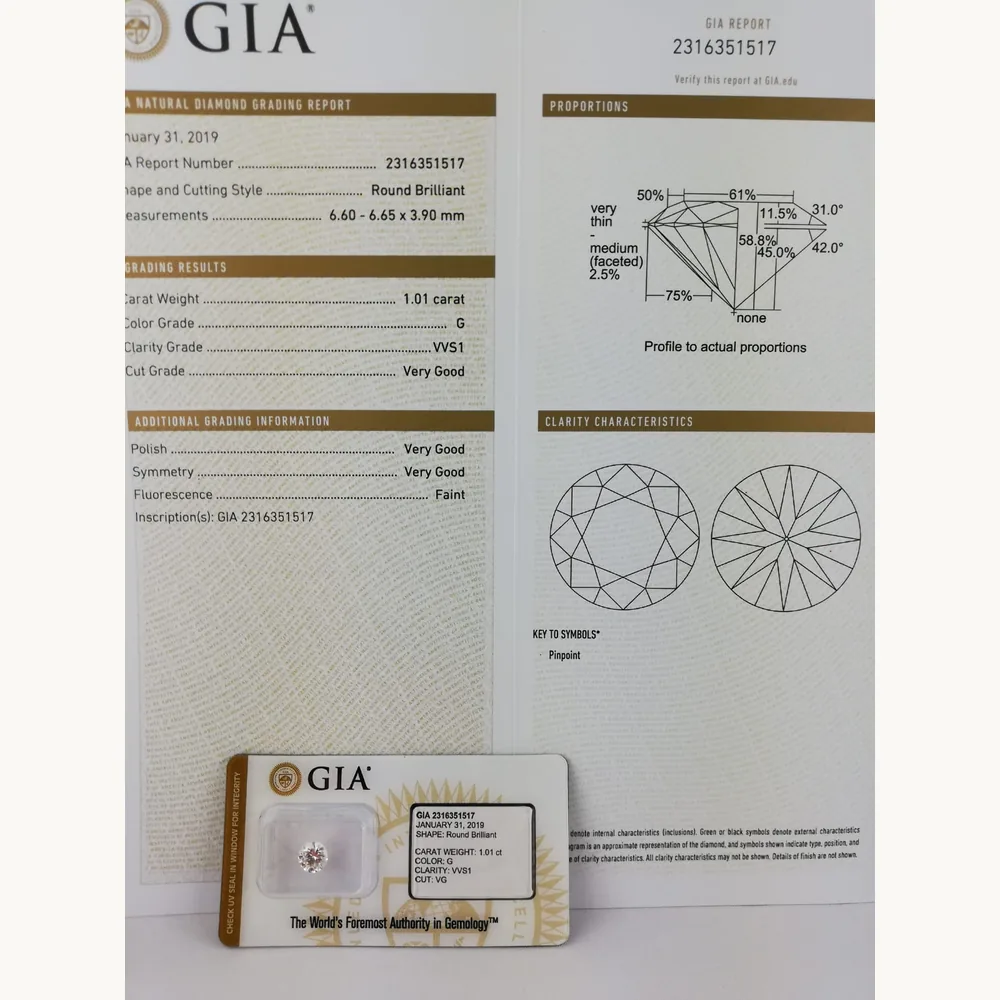
Paperwork pushes the number both ways. A verifiable grading report, an original invoice and a box with matching references shrink a buyer's uncertainty and therefore the discount taken against it. Their absence does not block a sale; it widens the margin a buyer has to protect.
Why the figure comes last
An honest offer follows the loupe, not the photograph. Screens shift colour, inclusions disappear, and settings conceal repairs, replacements and stress fractures. A remote reading can outline a defensible range and show the thinking behind it; narrowing that range to one number requires the piece on the table.
That thinking should stay available to you: which grades drove the figure, which characteristics pulled it down, and what resale route lies behind it. An offer that cannot be explained is not one you can assess, only one you can take or refuse. Owners who follow the arithmetic negotiate better, and that is as it should be.